
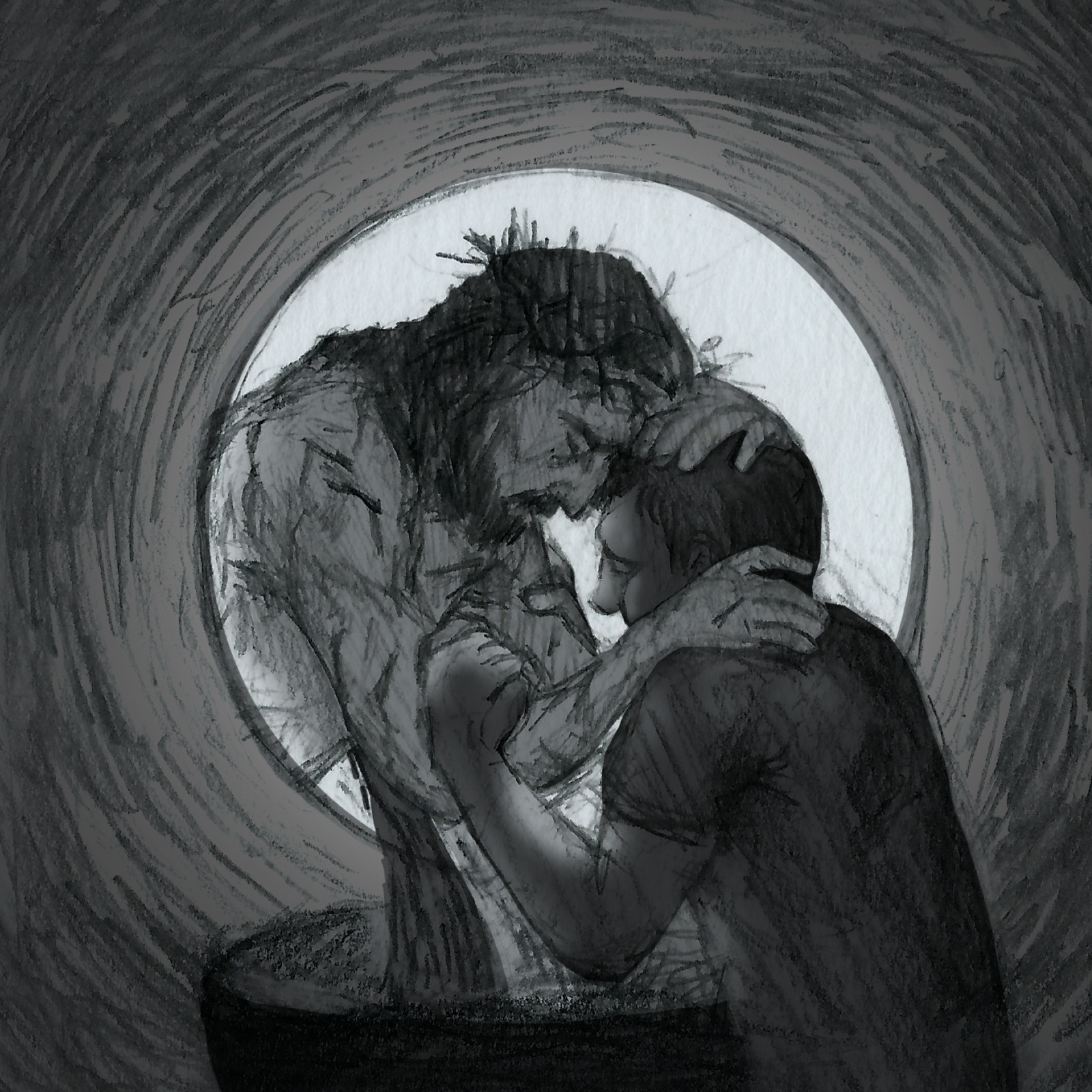
Holy Communion, which we receive at Mass and adore in prayer
“is the source and summit of the Christian life” (CCC1994:1324),
as the Catechism reminds us.
It is a covenant or pact. The covenant, sealed with the Blood of Christ, is the heart of the worship and life of the Church:
“For this is my blood of the covenant, which will be shed on behalf of many for the forgiveness of sins.”
(USCCB Matthew Chapter 26:28 https://bible.usccb.org/bible/matthew/26).
In the Old Testament, due to Israel’s constant infidelity to Yahweh, God revealed to the prophet Jeremiah the promise of a new covenant, a covenant written on the heart,
“which will bestow upon all the gift of the knowledge of God and of his merciful forgiveness”. (Jeremiah 31:31-34 see below).
This promise was definitively fulfilled in Jesus Christ, in the paschal supper that he had with his disciples, on the night that he was going to be taken away, in the blood of the covenant, shed for all on the summit of the Calvary. The Jews recalled the Old Covenant each year with the feast of Passover. We Christians recall and re-live the New Covenant each day, but in a special way on Sunday, in the Eucharistic celebration. The feast of the covenant is not annual but daily, weekly. Let us not forget the reciprocal covenant of God with the Church and with each one of her children. Consequently, of the Church and each one of her children with God. As Christians, each and every one of us must value the beauty of a covenant with God in the Blood of Jesus Christ, and value at once the seriousness and responsibility of a pact to which we have sworn our fidelity.
“See, days are coming—oracle of the LORD—when I will make a new covenant with the house of Israel and the house of Judah. It will not be like the covenant I made with their ancestors the day I took them by the hand to lead them out of the land of Egypt. They broke my covenant, though I was their master—oracle of the LORD. But this is the covenant I will make with the house of Israel after those days—oracle of the LORD. I will place my law within them, and write it upon their hearts; I will be their God, and they shall be my people. They will no longer teach their friends and relatives, “Know the LORD!” Everyone, from least to greatest, shall know me—oracle of the LORD—for I will forgive their iniquity and no longer remember their sin.”
(USCCB website Jeremiah 31:31-34)
The covenant that Christ makes between God and humankind is not only new, but also definitive. Thus the covenant finds fullness. He does not seal the penultimate, but the absolutely final covenant. The covenant between God and humankind in Christ will culminate and achieve its perfection at the end of all centuries, in eternity with God.
The New Covenant is destined to all peoples. Jesus Christ, the mediator of the New Covenant, needs mouths in order for the good news of this covenant reach all. He needs mouths and hands to consecrate the bread and wine of the new covenant and to distribute them to all. Both God and humankind need priests. It is necessary for the Christian community to be more aware of this need. If there are no priests, who will make present in the world the mediation of Christ between God and people? If Christian families have no children, or have only one child, two at the most, won’t the number of those that have been called by God to priesthood necessarily decrease? If the new couples live together without getting married, or get “married” only with a civil rite, won’t it be almost impossible for their children, once they have them, to hear God’s call to a priestly vocation? These are serious questions.
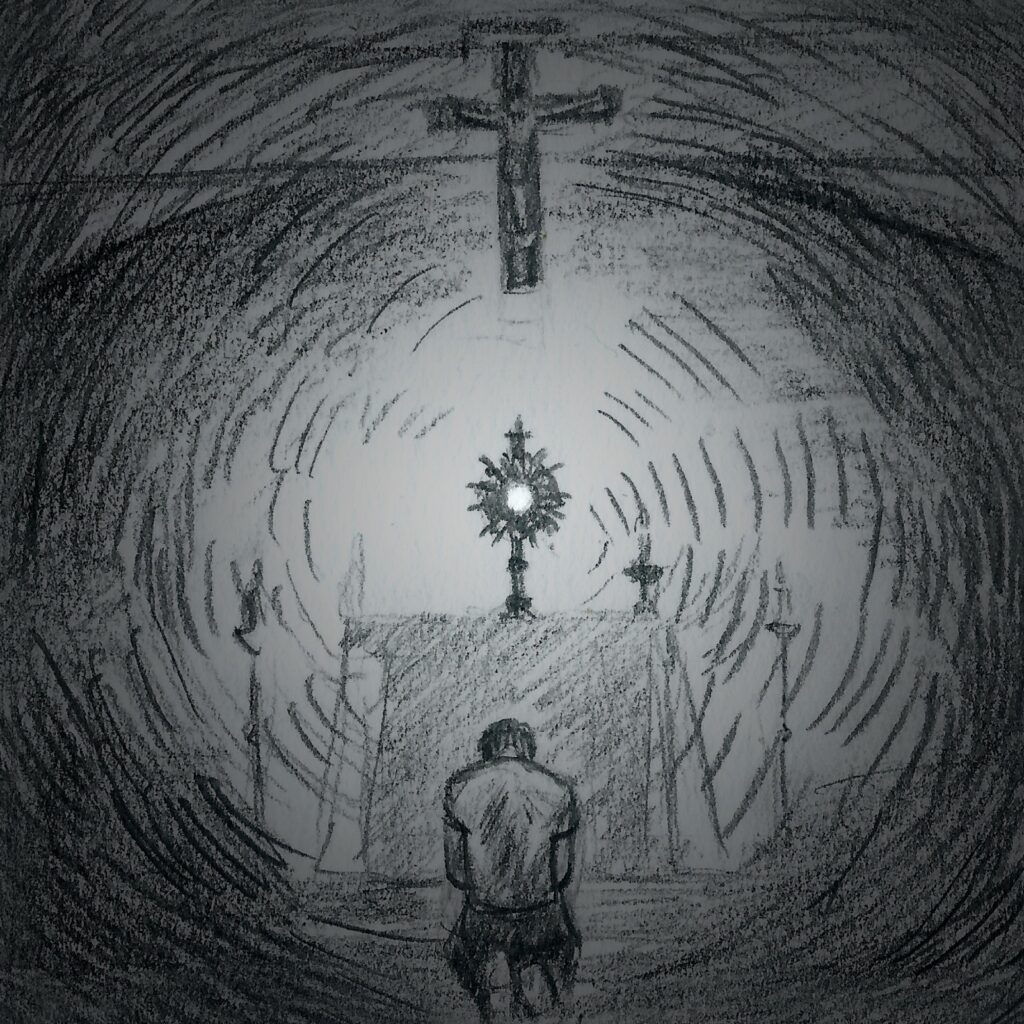
To worship the living God in the Eucharist , Jesus Christ is present, true God and true man. This is why the Catholic Church has worshipped and continues to worship the Eucharist, not only during Mass, but also outside its celebration. Pope John Paul II wrote,
“The Church and the world have a great need for Eucharistic worship. Jesus awaits us in this sacrament of love. Let us not refuse the time to go to meet him in adoration, in contemplation full of faith, and open to making amends for the serious offenses and crimes of the world. Let our adoration never cease.” (Letter Dominicae Cenae 3 of the Supreme Pontiff John Paul II, February 24th 1980)
There are those that attribute to the bustle of life the fact that they have no time for Eucharistic adoration, but let us be honest… many of us have time to go to the football game, to spend most of the night out, to go away for the weekend, to sit staring at the television watching a film or a show. All of these things are good in themselves, but why not make some time, between these or other activities, to go to Mass or to go into the Church for a few minutes and worship the transubstantiated Jesus Christ?
We all need the Eucharist. We are all members of the Body of Christ. Let us celebrate our union and covenant with Jesus and with one another.
Father Keith Byrne.
Reference’s
- Beautiful Art by Lieske Keegstra
- United States Conference Of Catholic Bishops (abbreviated above as USCCB) website Matthew chapter 26:28
- Catechism Of The Catholic Church ( abbreviated above as CCC1994) Latin text copyright Libreria Editrice Vaticana, Citta del Vaticano, English translation for Ireland copyright 1994 Veritas-Libreria Editrice Vaticana published in Ireland by veritas
- Letter Dominicae Cenae 3 of the Supreme Pontiff John Paul II, From the Vatican, February 24, First Sunday of Lent, in the year 1980, the second of the Pontificate. The website (https://www.vatican.va/content/john-paul-ii/en/letters/1980/documents/hf_jp-ii_let_19800224_dominicae-cenae.html )
